how to pull a line drawing into 3d in rhino
Rhino® is a popular CAD and 3D modeling application used in many fields. PhotoModeler is a popular photogrammetry program for measuring and modeling the real world using a camera. A PhotoModeler project can exist exported in the Rhino 3dm file format and further candy, or be used as the foundation for other work using Rhino'south modeling tools. A perfect way to employ photogrammetry with Rhino!
The two software products complement each other when working with real objects and scenes that demand to exist measured, modeled, improved, or manufactured. This article describes what can be achieved using Rhino with PhotoModeler, and outlines some tips when working with the two programs.
Example Uses
Overview Video
The video "7 Useful Tips for Using PhotoModeler with Rhinoceros 3D" describes the mode PhotoModeler and Rhino 3D complement each other and outlines tips for best use. View the video below, and beneath that, read about the export integration and the vii tips for use.
Exporting Tips
After completing a project with PhotoModeler, information technology can exist exported in a variety of formats, as shown here and documented in the online Help in this section. This document focuses on the Rhino 3dm file format.
All PhotoModeler items can be exported to Rhino, such as NURBS curves, surfaces, cylinders, triangulated meshes, photo-textures, and camera positions. Rhino is 1 of the few CAD packages that tin handle all PhotoModeler model objects. Come across examples below.
The layers used in PhotoModeler to organize the modeling are exported and friction match the Rhino layersso that yous can piece of work in the same organization system in both programs.
Real-world modeling and fabrication crave accurate scale. PhotoModeler transfers the user-divers coordinate systems and an accurate calibration to Rhino.
The ability to solve for camera positions and angles in PhotoModeler is a cadre role. Being able to have those same photographic camera views in Rhinoceros is fifty-fifty more than powerful. As well, the original photo is exported as Rhino wallpaper! See the Matching Camera Views example below.
Orthographic images (remapped photographic information to remove all perspective) can be exported to Rhino and used as precise backgrounds .
PhotoModeler's 2D Template and Pattern Digitizing system directly exports accurate 2d curve and line information, forth with background corrected images to Rhinoceros where the pattern outlines can be checked and modified. The cease result is authentic CNC data.
Projection descriptions defined in PhotoModeler's Project Information Dialog become projection notes in Rhino.
Exported Rhino 3DM Examples
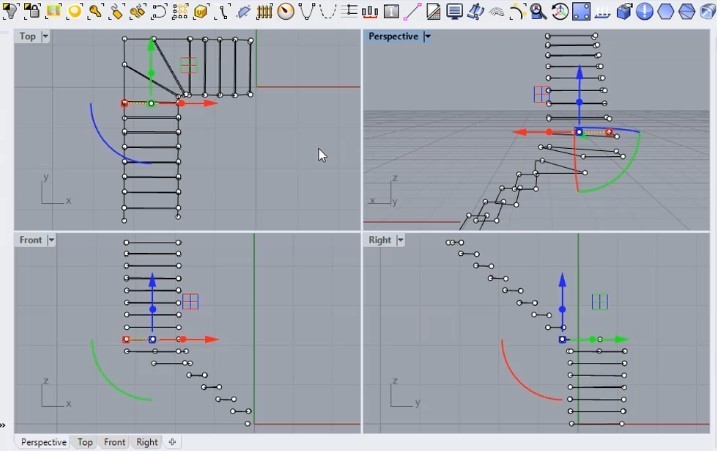
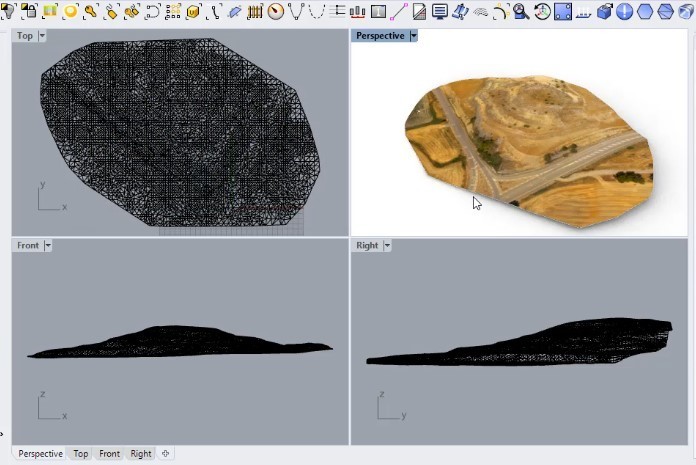
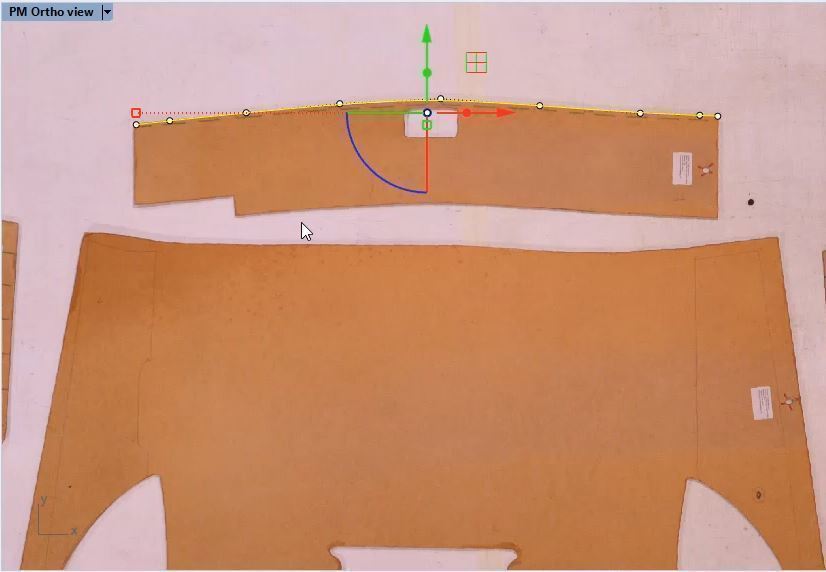
Orthophotos and Matching Photographic camera Views
There are two forms of image export from PhotoModeler. Ane is an orthophoto (an orthographic view of photographic data extracted from all the input photos). This image is like a 2d drawing and has no perspective. The orthophoto tin be exported every bit part of the Rhinoceros file, which is useful when tracing over a background epitome in Rhino, or when comparing various elements of a model. For 2nd template work, the PhotoModeler Template Pattern capture add-on tin can automatically generate this orthographic background view for Rhino. Here is a facade orthophoto example:
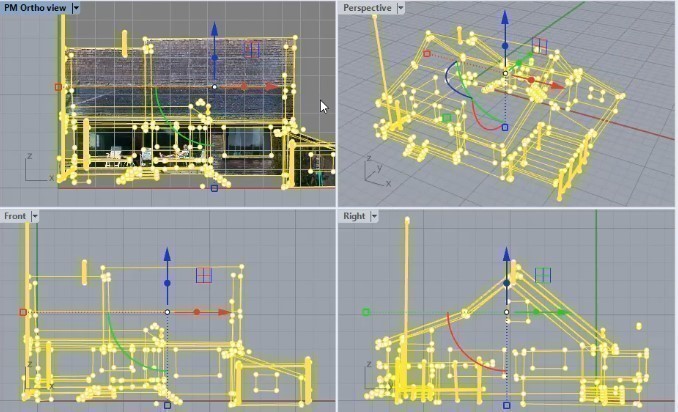
The 2nd form of image export to Rhino is an original photograph taken past the camera. PhotoModeler can export these images every bit backgrounds for each camera-rendered view. In other words, you lot tin run across a rendered 3D view from exactly the aforementioned camera position, angle and parameters (like focal length) as the original photo, combined with the original photograph every bit a background! This is great for modeling work, only also to return additional details on top of a photograph taken from a detail location - such as a modified building rendered on meridian of an original photograph.
In cases where the camera has high distortion, the model and original photo may not align in Rhino. Rhinoceros uses a mathematically-perfect camera for rendering which does not account for the distortions and properties of a real-world camera. Notation the alignment effect does non apply to orthophotos equally backgrounds (all corrections are made already). In the case of original-photo backgrounds, you can use PhotoModeler'due south Idealize Feature to output a remapped corrected image without baloney:
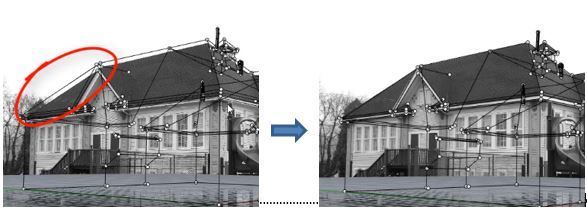
Background image in Rhino with overlaid CAD data. Left: original photo. Right: Arcadian photo showing better match.
These types of groundwork images/plates can exist used for visualization, or used as backgrounds for new objects being modeled to augment a scene.
Learn more than well-nigh the applications of PhotoModeler.
Sign up for the PhotoModeler Newsletter to keep informed of advances.
Source: https://www.photomodeler.com/using-photomodeler-with-rhino-3d/
0 Response to "how to pull a line drawing into 3d in rhino"
Publicar un comentario